AI tools
AI is grading you.
Jev can’t write a single word. It might still decide who sees yours.

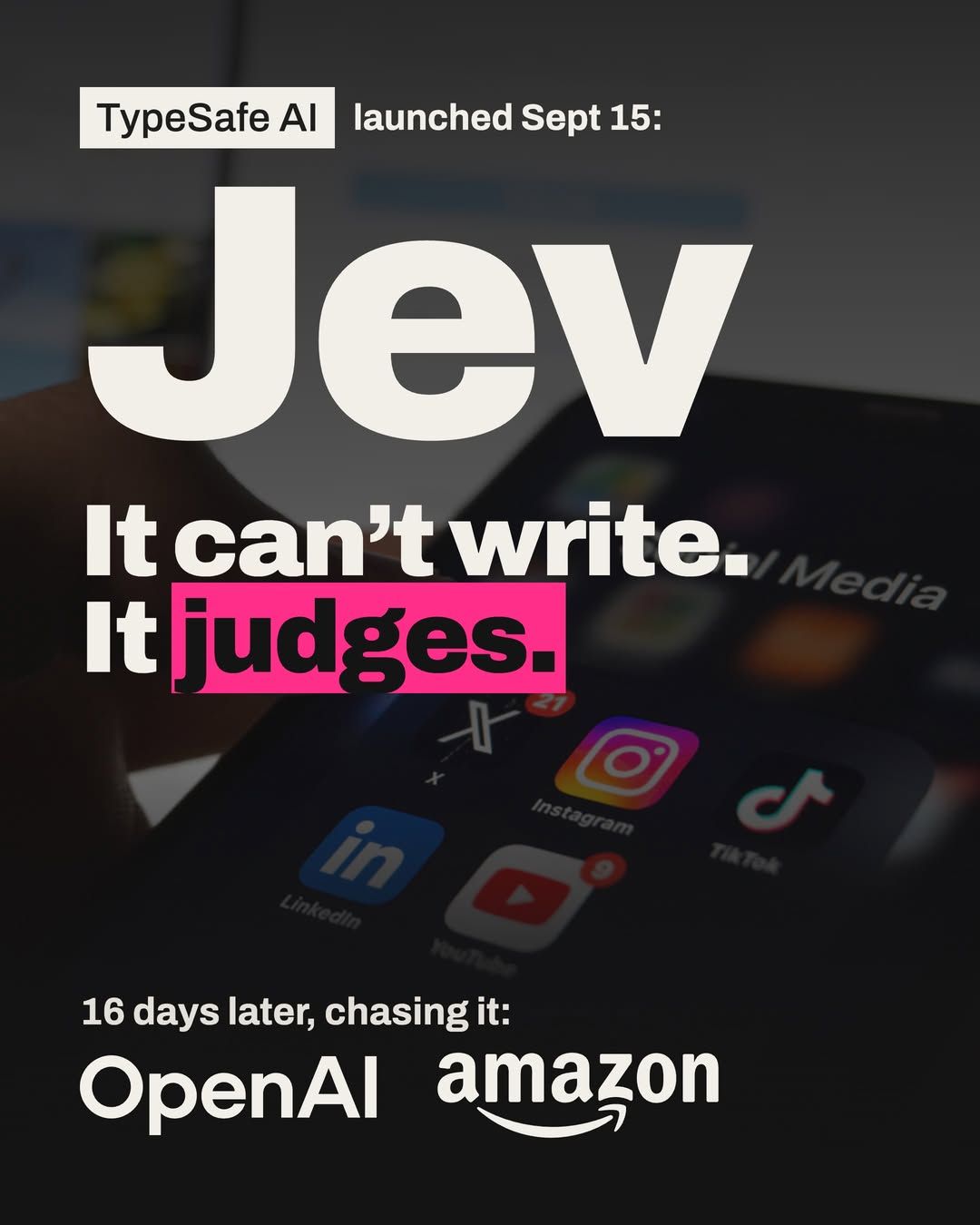
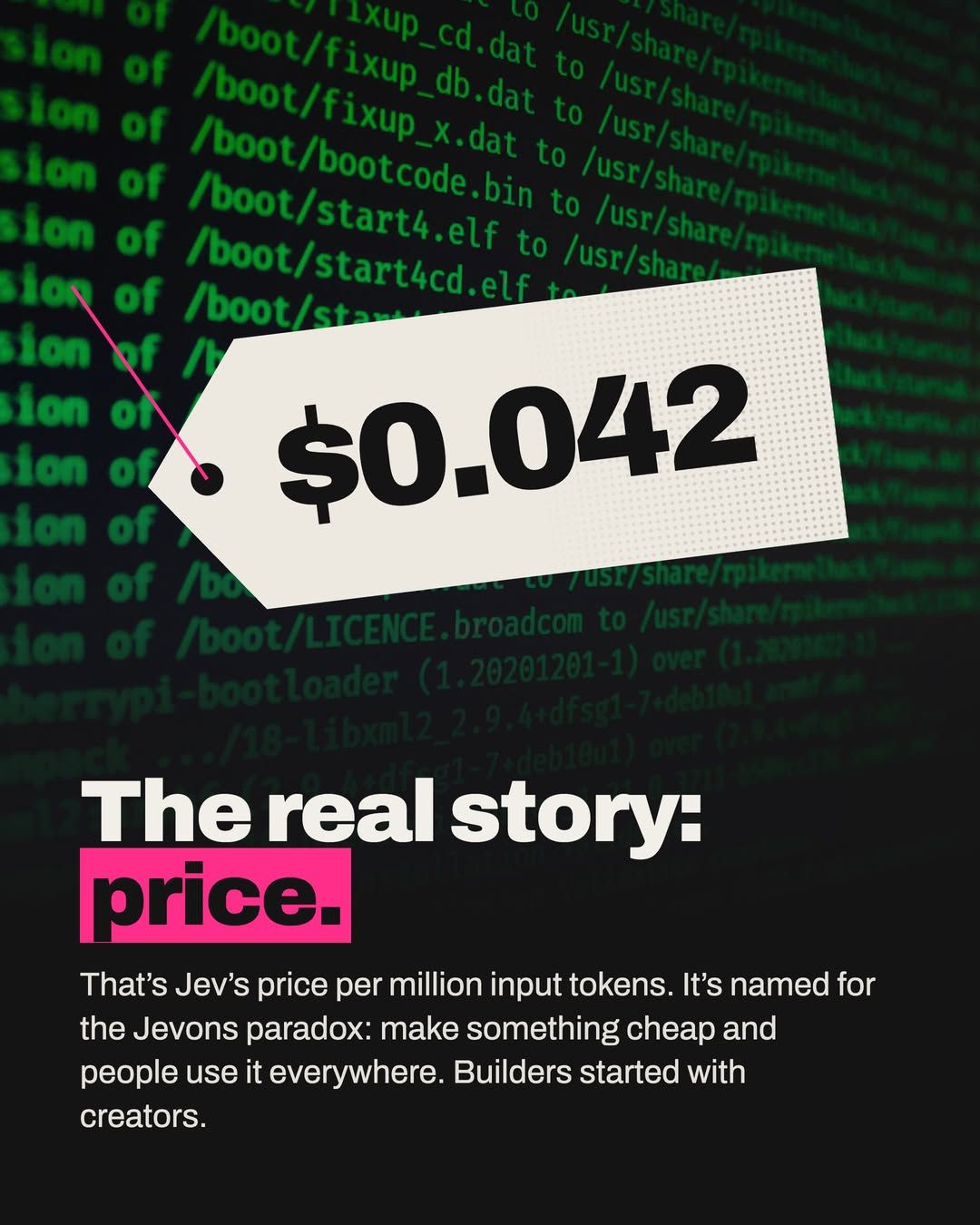
On Sept 15, TypeSafe AI, led by ex-OpenAI researcher Diogo Almeida and backed by a $40M seed led by DCVC, launched Jev: a model that answers yes/no, pick-one or rate-it questions about text, each with a probability. It costs $0.042 per million input tokens. Within 16 days its launch post had about 40 million views, an independent catalog listed 620 things built with it, and OpenAI and Amazon had each launched a rival.
Builders report sorting 20,700 YouTube comments for 20 cents and studying 100,000 viral posts for 67 cents. One tool screens Instagram creators for brand safety at $4 per 1,000 profiles.
Two flags before our take. Jev is weeks old, and most of these figures are builders’ own reports, not independent tests. The feed filters and the screener have almost no users yet.
Our take: Jev won’t replace creators. It can’t make anything. It makes judging cheap, and judging is how platforms are answering the flood of AI content. Look-alike work gets filtered first: faceless, templated video, then formula text posts. Your face, your voice and first-hand experience get a tailwind. And no, it doesn’t predict virality or detect AI writing.
If your work could have come from anyone, a filter will treat it that way. So what part of your work could only have come from you?
Background
TypeSafe AI was co-founded by Diogo Almeida, a former OpenAI researcher who co-authored the InstructGPT work behind ChatGPT’s training method, along with Erik Gafni and Sasha Sheng. The company spent about two years in stealth before it introduced Jev in mid-September, together with a $40 million seed round led by DCVC. The German tech site Trending Topics reported that the round valued the company at about $200 million.
Jev does not generate text the way a chatbot does. It picks from a list of options, places an input on a scale, or judges a yes-or-no statement, and it attaches a probability to each answer. It is built to run inside other software rather than to talk to users. TypeSafe says Jev responds in about 70 to 500 milliseconds and was trained only on synthetic data, and it does not charge for output tokens. The speed and cost figures come from the company. Early uses developers have described include routing support tickets, choosing tools for AI agents and sorting email. Access is through a waitlisted early-access API, which went down under heavy demand after the launch.
Bigger companies moved quickly. On Sept. 29, at its DevDay event, OpenAI announced a Decisions API that chooses among options a developer defines and returns a confidence score. Coverage described it as OpenAI’s answer to Jev. OpenAI has not published a price for it.
Sources
- Introducing Jev, Ex-OpenAI researchers build a new kind of AI Model YourStory
- TypeSafe AI Releases: Jev ThursdAI
- Jev: Warum dieses neuartige KI-Modell gerade Entwickler:innen begeistert Trending Topics
- OpenAI Decisions API AI/TLDR
The carousel
9 slides · Open on Instagram







Disclosure: VPRWRE drafts with Claude, Anthropic’s AI.