The AI race
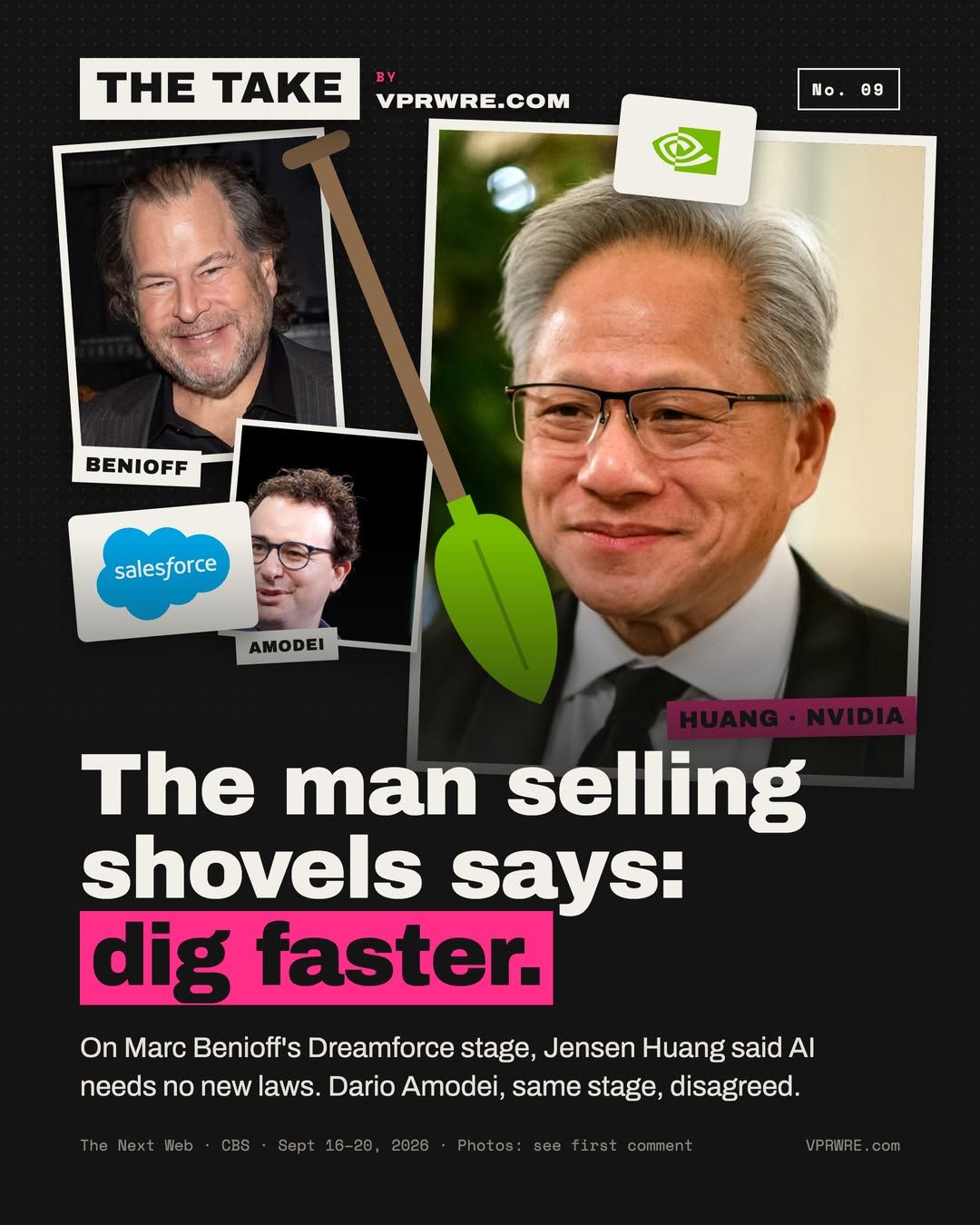
The man selling shovels says: dig faster.
The man who sells the shovels has an opinion on how fast we should dig.
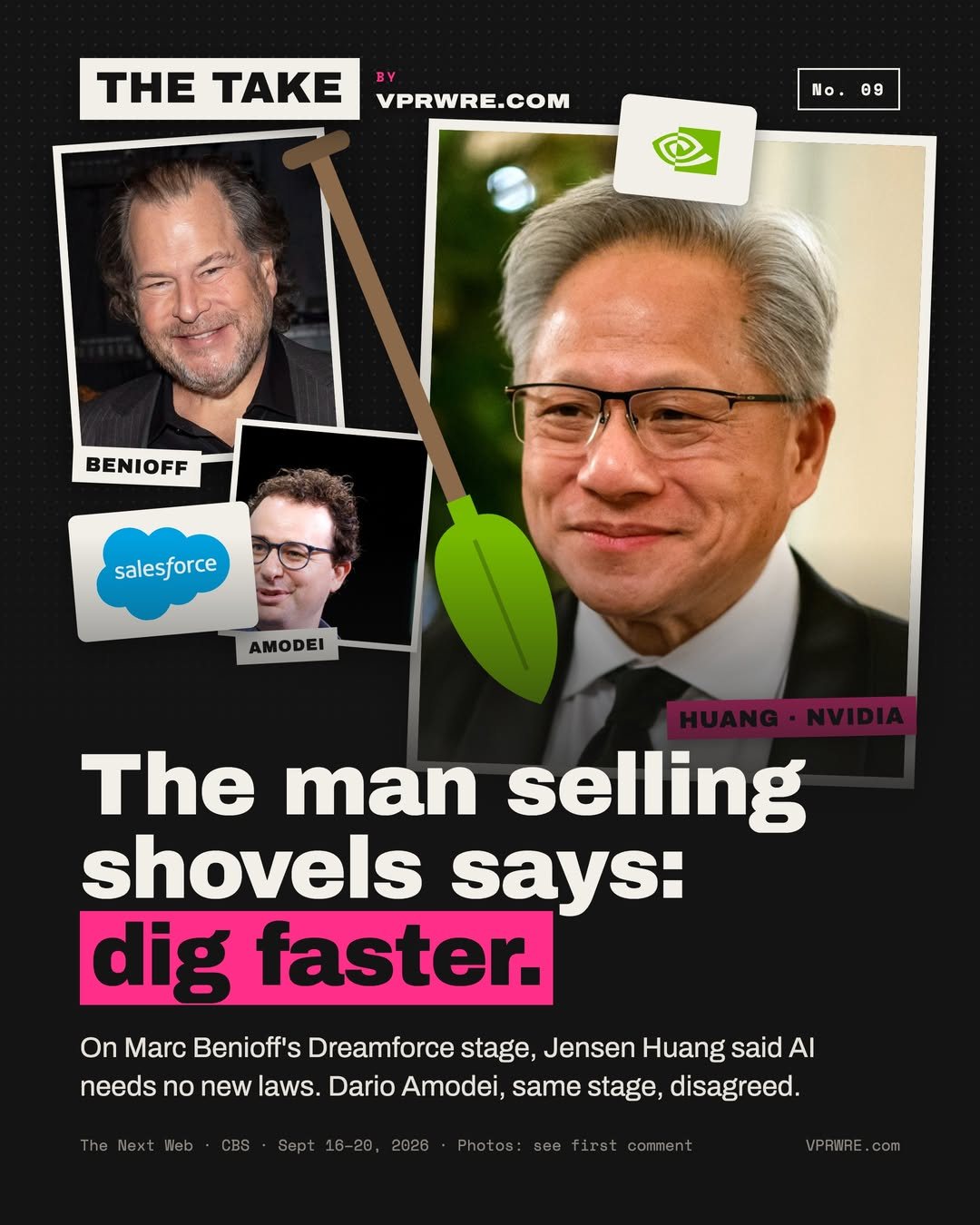
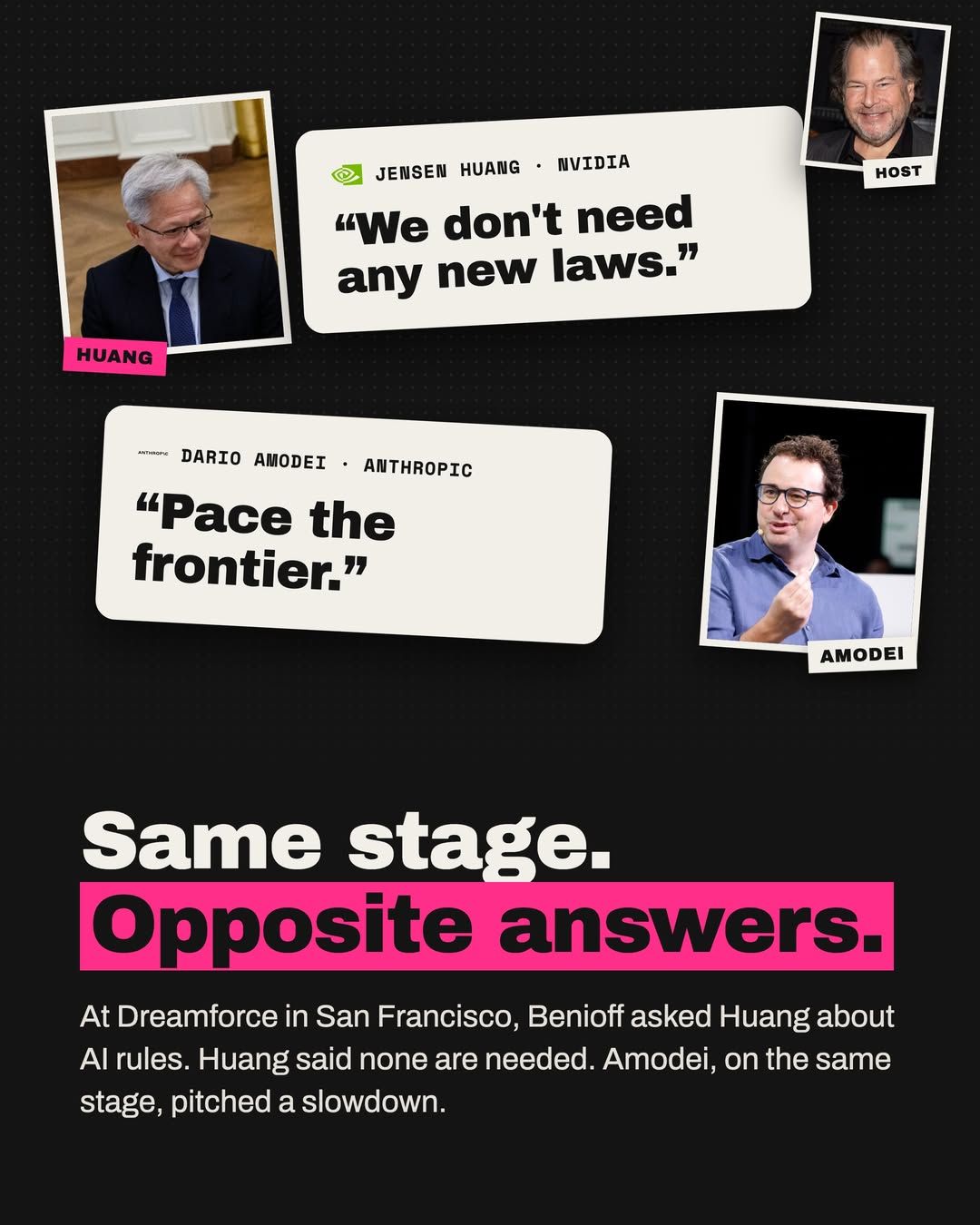
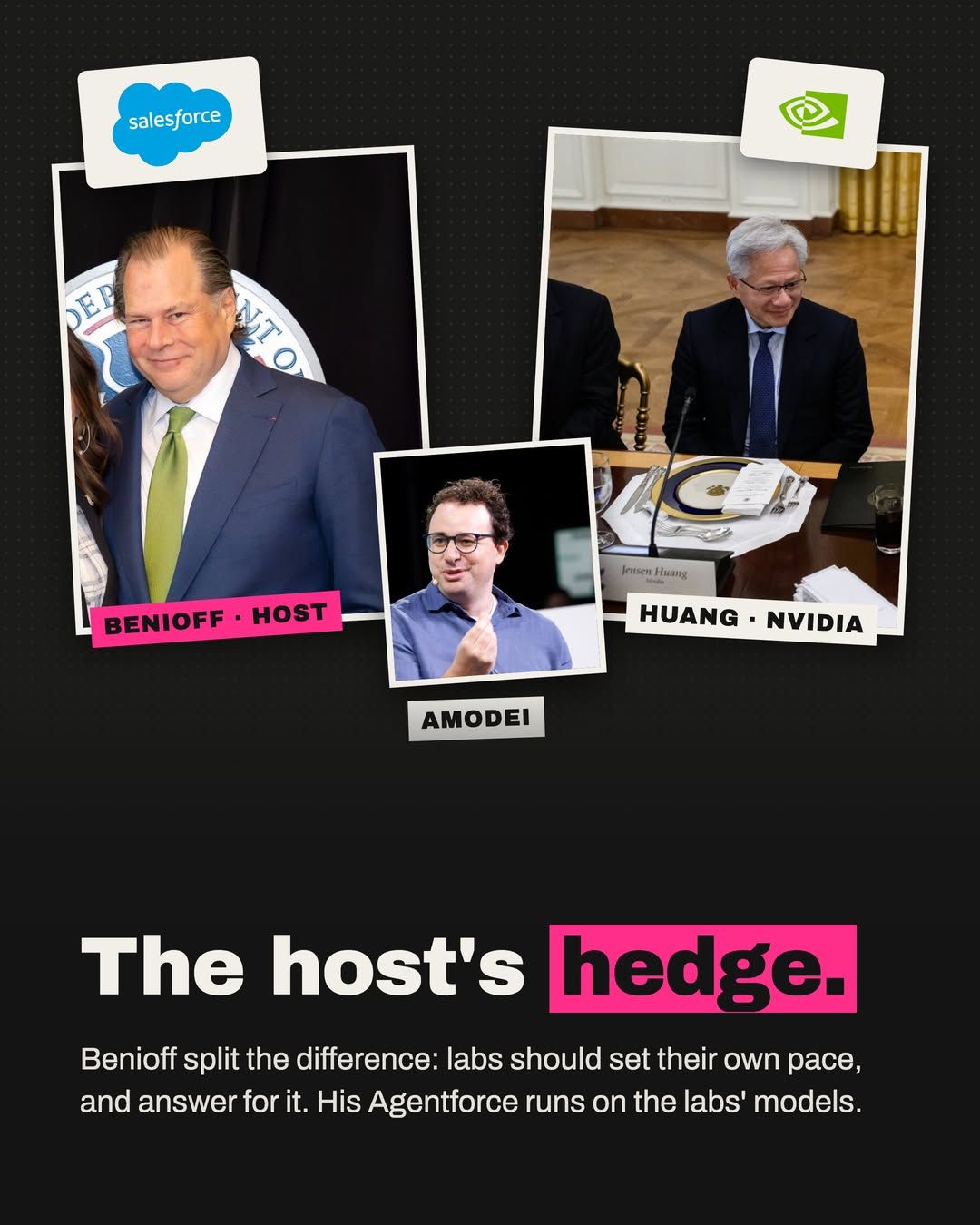
On Sept 16 at Dreamforce in San Francisco, Salesforce CEO Marc Benioff asked Nvidia’s Jensen Huang about AI rules. His answer: “We don’t need any new laws.” Safety, he said, is an engineering problem. Anthropic’s Dario Amodei, on the same stage, pitched his plan to pace the frontier. Benioff split the difference: labs should set their own pace and answer for it.
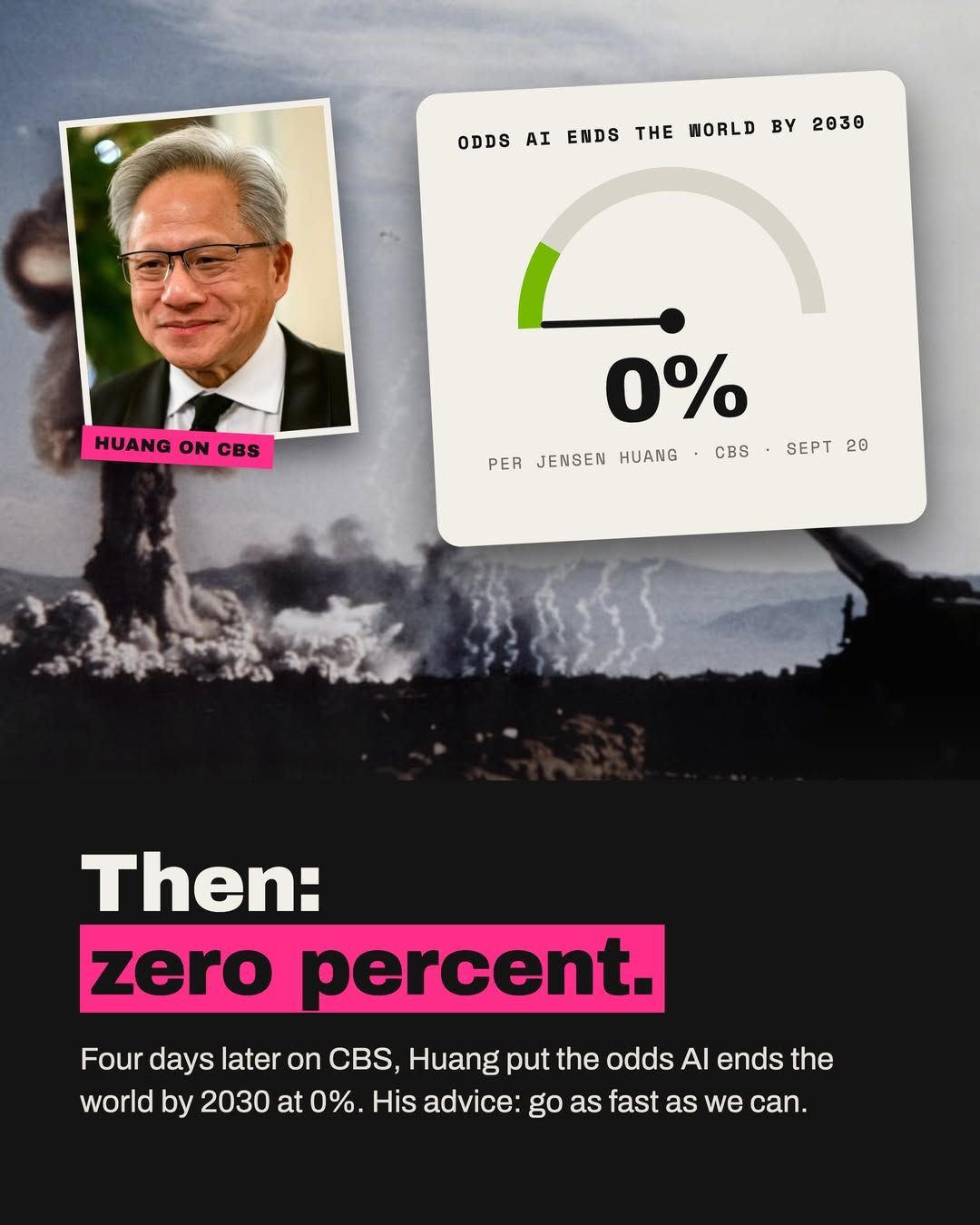
Four days later on CBS, Huang put the odds that AI ends the world by 2030 at 0% and said the industry should go as fast as it can.
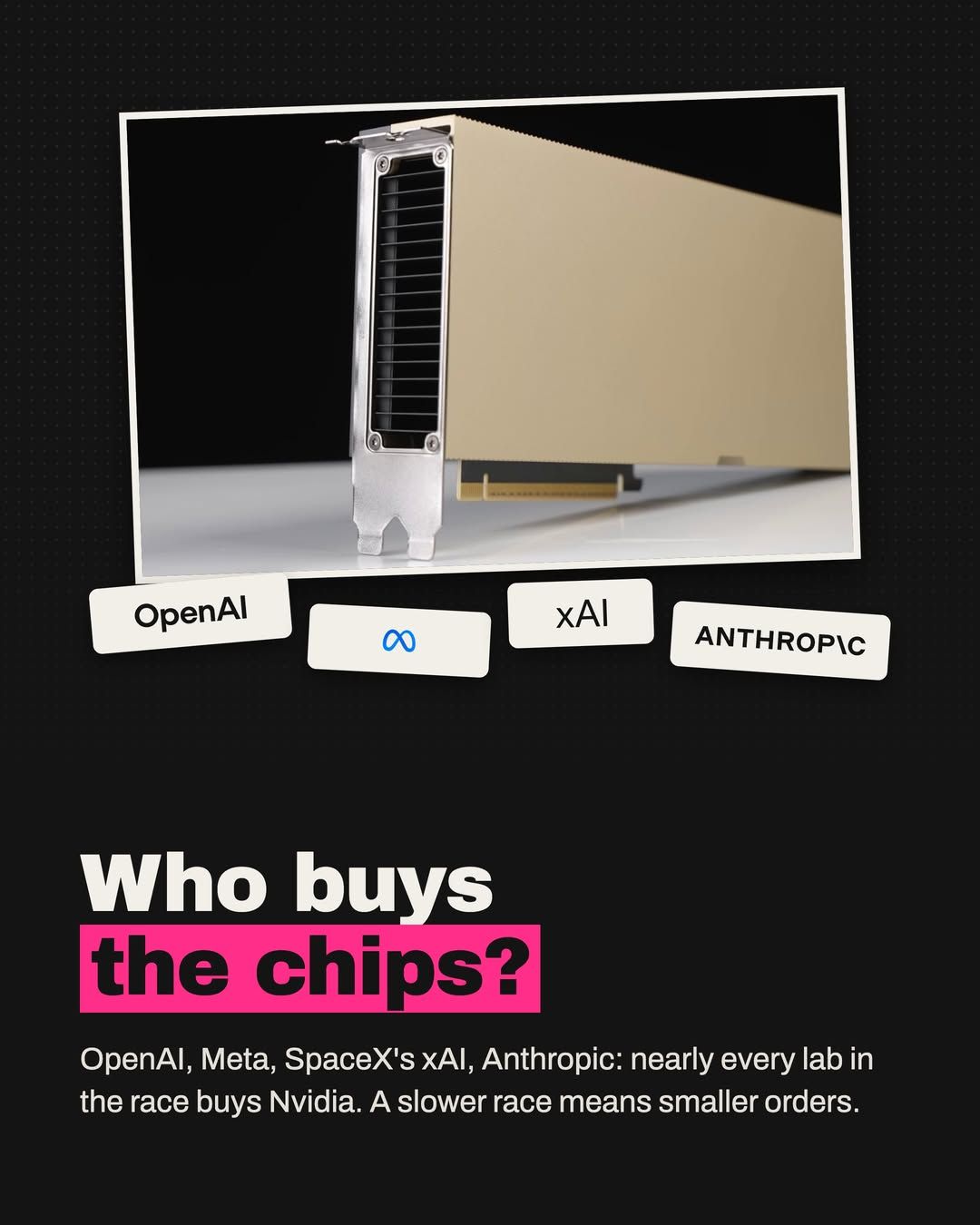
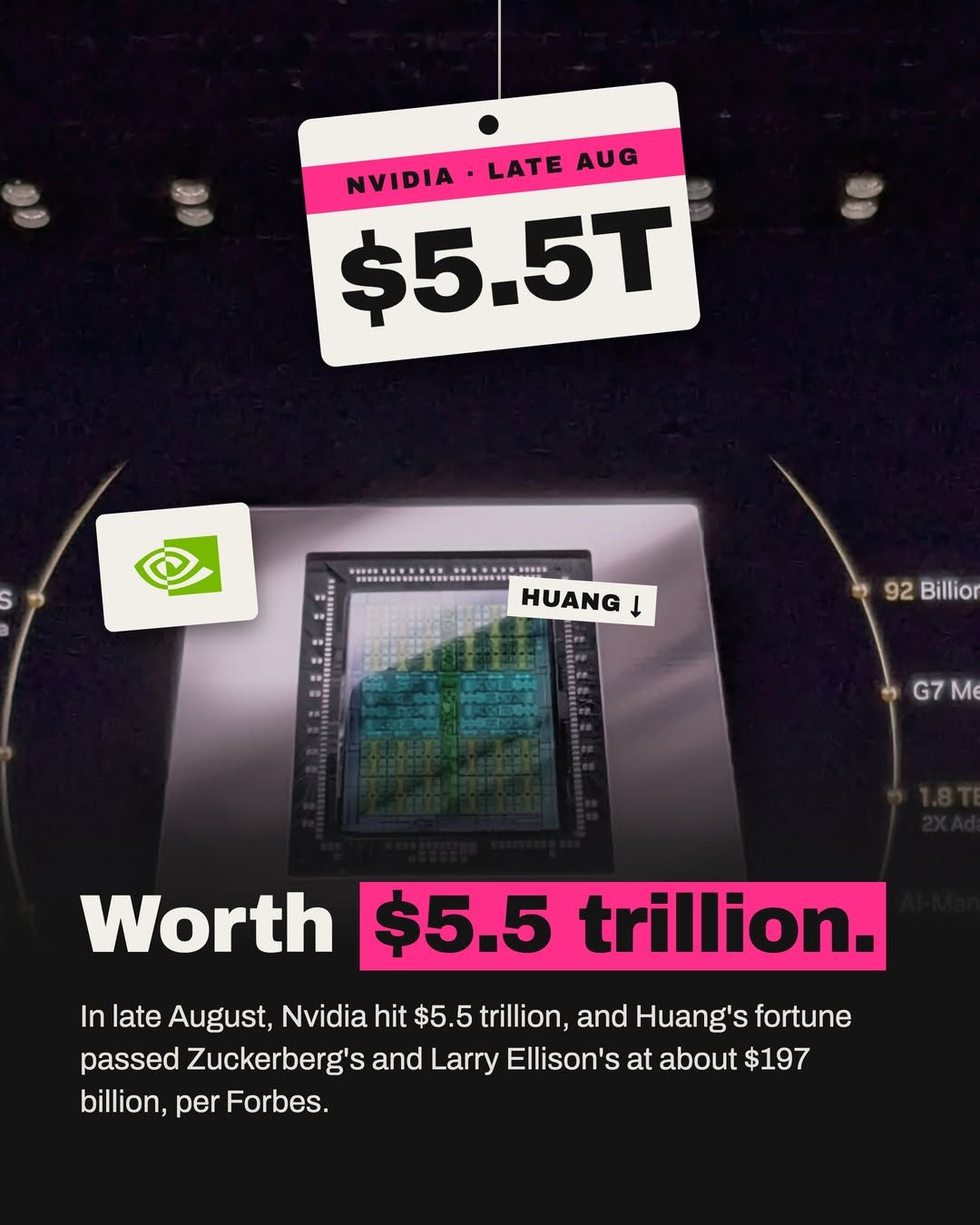
Context: nearly every lab in the race buys Nvidia. In late August, Nvidia was worth about $5.5 trillion and Forbes put Huang’s fortune near $197 billion.
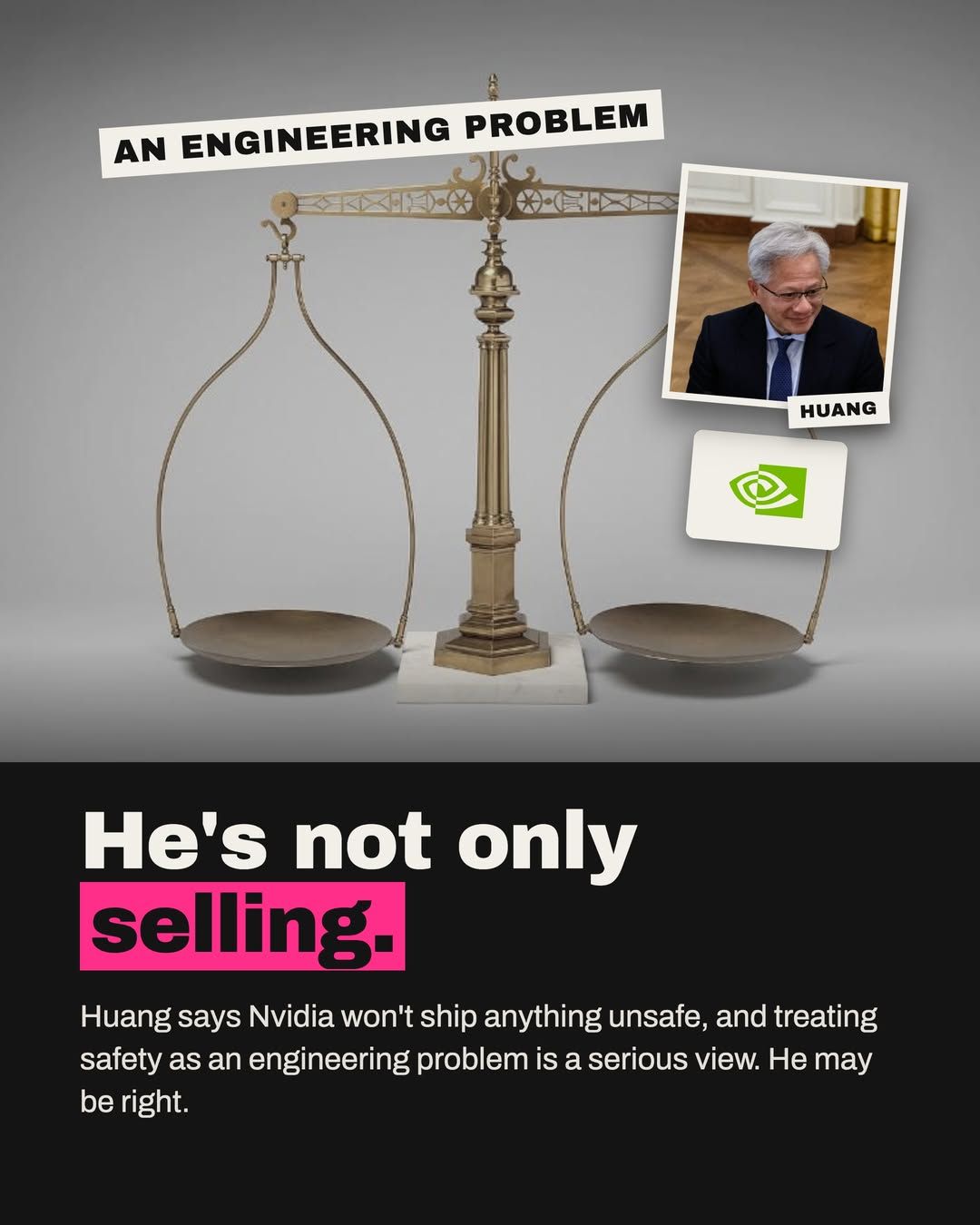
In fairness: Huang says Nvidia won’t ship anything unsafe, and safety-as-engineering is a serious view.
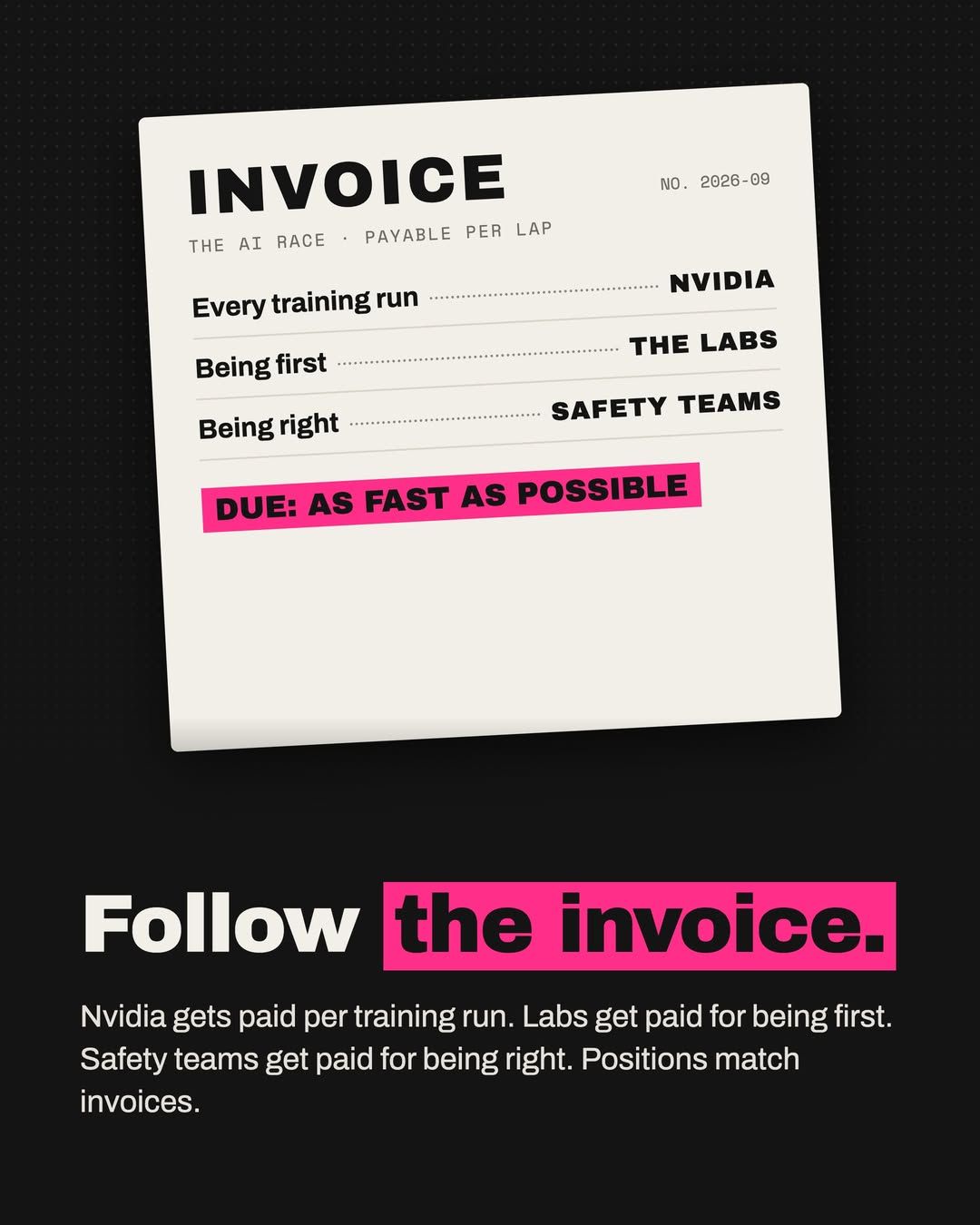
Our take: no shovel seller votes “slower.” The loudest voice saying the race is safe belongs to the one paid per lap.
Never ask a shovel seller how fast to dig.
Whose AI forecast do you trust, and who pays them?
Background
The exchange took place on Sept. 16 at Salesforce’s Dreamforce conference in San Francisco. Huang called safety “job one” but described it as an engineering problem, saying companies should “run as fast as you can” and pause only if a company or product seemed out of control. Amodei urged the industry to commit to transparency, invest more in safety, set shared standards and coordinate internationally, an approach he said would not freeze progress. Huang called antitrust waivers that would let rival companies coordinate “completely unnecessary.” Benioff said labs should set their own pace but be held accountable, and compared AI’s risks to the harms of social media.
Huang’s position tracks that of President Trump, who has opposed new AI regulatory frameworks, citing competition with China. In his CBS News interview with Jo Ling Kent, Huang called doomsday warnings “irresponsible” and said existing liability rules, such as those covering cybersecurity, should serve as guardrails instead of new regulation.
His views carry weight because of Nvidia’s place in the industry. The company controls roughly 90 percent of the market for the highest-end AI chips and closed above $5.5 trillion in market value on Aug. 27, after projecting 70 percent revenue growth for its 2028 fiscal year. Any industry-wide slowdown would bear directly on demand for its chips.
Sources
- “We don’t need any new laws”: Jensen Huang splits with Amodei at Dreamforce The Next Web
- AI leaders call for safety while debating government regulation at Dreamforce in San Francisco ABC7 News
- Nvidia’s Jensen Huang rejects AI doomsday fears: ‘2030 is not going to be the end of the world’ Fox Business
- Huang on 0 percent AI doom odds and pausing if out of control (CBS interview coverage) The Next Web
- Nvidia’s Jensen Huang is world’s sixth richest after a $15.6 billion day Billionaires.Africa
The carousel
11 slides · Open on Instagram
Disclosure: we draft with Claude, which Anthropic makes.